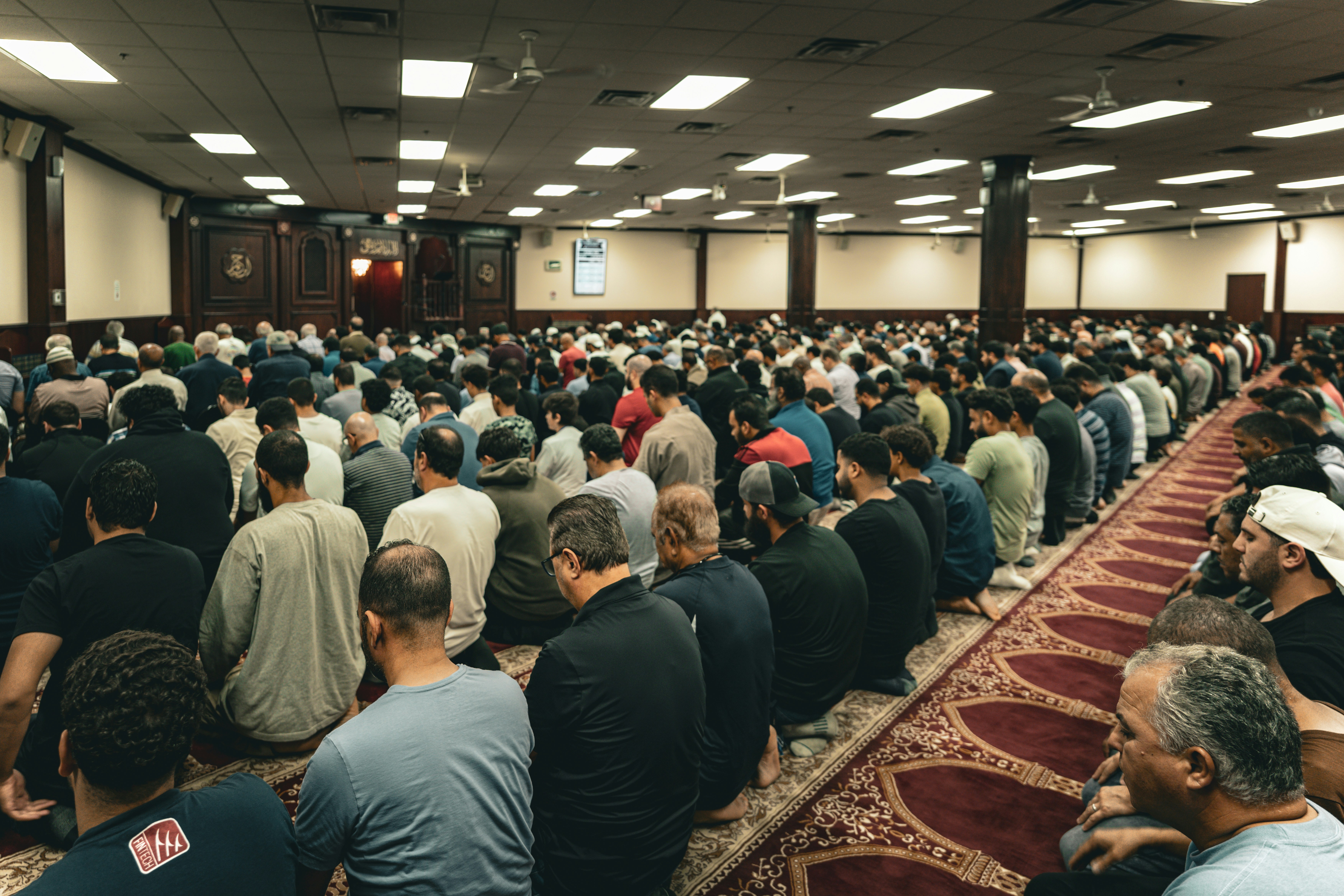

Looking at the state of the world, it is but natural that the average Muslim wants to act. We feel agitated that we’re not doing enough because the ones who were supposed to act are not acting, and it feels like we, the average citizens, are the ones sinning if we do not do something. It feels like we are the ones at a loss and that Allah will hold us accountable.
And in truth, Allah will hold us accountable. But often not for the things we imagine.
Allah will not hold us accountable for what was beyond our control. The concept of freedom within submission in Islam offers a powerful way to understand how Muslims respond to injustice while remaining faithful to divine guidance.
“Allah does not burden a soul beyond what it can bear.” (Qur’an 2:286)
What He will hold us accountable for is our test.
When the world becomes turbulent and injustice becomes visible, it is easy to assume that the test is simply to act. But in Islam, the test is not merely about action — it is about obedience. It is about whether our response to injustice remains within the limits that Allah has set, even when every emotion urges us to go beyond them.
This is where the concept of freedom within submission becomes visible.
Islam teaches that true freedom is not the ability to act on every impulse. True freedom is the ability to restrain oneself for the sake of Allah, even when doing so is difficult.
The Two Tests Muslims Face in Times of Turmoil
In moments like these, there are often two tests unfolding at once.
The first test belongs to those who claim they are “just following orders.”
Their test is realizing that their rizq, their protection, and the safety of their families are with Allah, not with institutions or authorities.
“And whoever fears Allah – He will make for him a way out and provide for him from where he does not expect.” (Qur’an 65:2–3)
A Muslim cannot justify wrongdoing by appealing to authority. If the chain of command asks you to do something morally wrong, something that is clearly a sin, something that is in disobedience to Allah, or can potentially lead to something Allah dislikes.
Then the Messenger of Allah ﷺ made this principle very clear:
“There is no obedience to creation in disobedience to the Creator.” (Musnad Ahmad)
“A Muslim must listen and obey in what he likes and dislikes unless he is ordered to commit a sin. If he is ordered to commit a sin, then there is no hearing and no obedience.” (Sahih Bukhari 7144; Sahih Muslim 1839)
Institutions may command obedience, but Islam commands conscience.
This is why Islam introduces something that many systems struggle with: individual accountability.
On the Day of Judgment, people may attempt to point to their leaders.
“Our Lord, we obeyed our leaders and our great ones, and they led us astray from the path.” (Qur’an 33:67)
But the Qur’an tells us what will happen next.
“When those who were followed disown those who followed them, and they see the punishment…” (Qur’an 2:166)
The reality is sobering: no leader, institution, or authority will stand between a person and their accountability before Allah.
The only hope then will be Allah’s forgiveness and mercy — and those are sought by standing by what Allah has deemed right, even when it is difficult.
Sometimes that resistance is not loud. Sometimes it is quiet.
Sometimes the most powerful form of rebellion is simply refusing to disobey Allah.
The Second Test
Then there is the test for the rest of us. Those who want to act, who feel the urge to step outside and “do something… anything.”
Passion can be a powerful force. But passion, if left unchecked, can also lead to disobedience. Islam does not deny the legitimacy of anger in the face of injustice. In fact, it recognizes it. What it insists upon is that anger must remain subordinate to divine guidance.
Responding to oppression with strength is demanded of Muslims. But harming the innocent in the process is not.
“Whoever kills a soul unless for a soul or for corruption in the land – it is as if he has killed all mankind.” (Qur’an 5:32)
The Prophet ﷺ reinforced this principle repeatedly.
“Do not kill women or children.” (Sahih Bukhari 3014; Sahih Muslim 1744)
“Do not kill the elderly, the young, or women.” (Sunan Abu Dawud 2614)
In Islam, even war — the most chaotic of human experiences — is bound by ethical limits. So what then of our own actions when emotions run high? Our test is whether we can restrain ourselves within what Allah has decreed. And restraint is not weakness.
The Prophet ﷺ described true strength this way:
“The strong person is not the one who overcomes others in wrestling, but the one who controls himself when angry.” (Sahih Bukhari 6114; Sahih Muslim 2609)
Leave a Reply